worker representation and co-determination

In our crowdsourced manifesto of policies people wanted in place, we discussed worker co-determination:

Workers’ rights

We will require half of the board to be assigned to worker representatives for companies with 50+ employees, including all resorts. We will legally enshrine regulations for minimum standards of wages, working conditions, and hours for private companies as well as public. Companies will be required to provide workers’ compensation for injuries on the job.

So we’re reprinting some material from online about what worker co-determination is and how we might start.


What is co-determination?

Codetermination is the practice of workers of an enterprise having the right to vote for representatives on the board of directors in a company. It also refers to staff having binding rights in work councils on issues in their workplace. The practice of board level representation is widespread in developed democracies. The first laws requiring worker voting rights passed in 1854. Most countries with codetermination laws have single-tier board of directors in their corporate law (such as Sweden, France or the Netherlands), while a number in central Europe (particularly Germany and Austria) have two-tier boards.

Most laws apply to companies over a certain size, from Denmark at 20 employees, to Germany over 500 (for one-third representation) and 2000 (for just under one half), to France over 5000 employees. This is to minimize the burden for small businesses while ensuring that huge corporations, which represents a large proportion of the economy, have worker and stakeholder representation,

Codetermination gives workers a voice alongside shareholders. Worker co-ownership would also give them a stake in the company, making them shareholders as well. Laws could mandate a certain percentage stake in companies as shares owned by workers, who receive as dividends a proportion of the fruits of their labor instead of it all going to the wealthy.

In economies with codetermination, workers in large companies may form special bodies known as works councils. In smaller companies they may elect worker representatives who act as intermediaries in exercising the workers’ rights of being informed or consulted on decisions concerning employee status and rights. They also elect or select worker representatives in managerial and supervisory organs of companies.

In codetermination systems the employees are given seats on a board of directors in one-tier management systems, or seats in a supervisory board and sometimes management board in two-tier management systems.

In two-tier systems the seats in supervisory boards are usually limited to one to three members. In some systems the employees can select one or two members of the supervisory boards, but a representative of shareholders is always the president and has the deciding vote. An employee representatives on management boards are not present in all economies. They are always limited to a Worker-Director, who votes only on matters concerning employees.

In one-tier systems with codetermination the employees usually have only one or two representatives on a board of directors. Sometimes they are also given seats in certain committees (e.g. the audit committee). They never have representatives among the executive directors.


The German stakeholder system

The German stakeholder system of co-determination, which gives legal rights to workers to co-manage corporations, has held back the forces of short-termism1 that have dominated American corporations for the past three decades, driven our inequality crisis, and weakened our economy.

A national law requiring the boards of public companies to include worker representatives—a key element of co-determination—would, in one fell swoop, upend our current shareholder-oriented corporate governance model and redefine it as a stakeholder system, creating resilience against the pressures of short-termism.

Workers especially, who are investing in companies with their own labor on a daily basis, have a legitimate claim as corporate stakeholders, and it will serve companies, and society more broadly, if we—on the left at least—felt empowered enough to stake this claim.

There are other policy options besides co-determination, particularly different worker ownership models, including employee stock ownership plans (ESOPs) and cooperatives, that would also combat short-termism. However, the larger point remains: Any benefits provided to workers that lack meaningful stakeholder decision-power will fail to foster a sustainable, long-term oriented system for any stakeholders, including workers.

The main differences concern the structure of corporate boards and the influence of workers on decision making at the top. Companies in English-speaking countries tend to have one board, whose chairman is often also the chief executive officer. Employees, meanwhile, have little to no say in strategy. The company’s fiduciaries must act only in the interests of their main “stakeholders,” which are their shareholders. At German companies, all this is different.

worker codetermination german stakeholder

Germany made it compulsory to have one board of executive officers and another, separate, board of supervisors. This independent non-executive panel had the duty to hold management accountable and to protect the interests of shareholders.

The model obliges directors to consider all stakeholders in corporate decisions. Thus German boards must, in theory, heed the concerns not only of shareholders but also of employees, creditors, suppliers, and local governments, and should take a long-term perspective that stretches over generations.


Co-determination, in principle and practice

For most large public and private companies in Germany, i.e. those with more than 2,000 employees, half the seats on the supervisory board go to elected worker representatives, mainly drawn from the company’s work council as well as trade unions. The other half go to shareholder representatives. There is also a supervisory board chair, usually representing capital, who can cast a tie-breaking vote. In practice, the chair rarely exercises this power, preferring to allow the consensus-building process to play itself out.

Co-determination is intimately linked to the dual-board system. If employee representatives were tasked with debating management decisions alongside their bosses on a unified board, irresolvable conflicts of interest would be the likely result.

However, employee representatives and shareholders working on equal footing in an oversight capacity has been a beneficial set-up for labor relations and even for competitiveness, by some measures. German workers have historically been among the least strike-prone in Europe. As a rule, employee representatives feel secure enough in their authority to give a fair hearing to proposals from their fellow stakeholders.
 

deliberative democracy

Deliberative democracy is one of my favorite ideas for how we might govern ourselves in the future, and I believe that we’ll see universal basic income and deliberative democracy happen in some countries in our lifetimes. I think deliberative democracy could find a real home in the Maldives when we’ve gotten our politics back to a reasonable place, so I’m going to do a series on it [guest post]

About deliberative democracy and how it might be a perfect fit for the Maldives

Deliberative democracy is a form of direct democracy that has learnt from the pitfalls of earlier experiments in direct democracy. A common leftist goal, it has only taken place in a few limited situations so far around the world.

A selection of constituents is randomly drawn for a citizens’ jury. The selection is designed to reflect the actual demographics of the region in factors such as gender and age. The citizens’ jury sees stakeholders from all sides and experts on the area to be fully informed on the issue at question. They then deliberate among themselves and come to a conclusion.

In direct models, this decision is a binding vote on the matter. In other models, this decision is seen as a strong recommendation for the elected representative on how to vote. This is also known as deliberative polling and creates a very strong norm for the candidate to vote accordingly, even though it isn’t officially binding.

Candidates that promise to vote according to deliberative polling of their citizens essentially promise to act as a conduit to direct democracy by their constituents.  Even if these candidates don’t win, introducing and normalizing the idea of deliberative democracy to the wider public contributes greatly to its likelihood of success in the future. This is the most likely path to eventually achieving full, binding deliberative democracy.

Deliberative democracy is merely our traditions over hundreds of years, brought back and updated for modern times. The core idea of deliberative democracy is much more natural to Maldivians that it would be in many other countries. Traditionally, Maldivian islands have held island meetings of elders and stakeholders to discuss among themselves and come to a conclusion.

The advantages of deliberative democracy

Deliberative democracy models allow for greater participation by citizens in the democratic process as it reflects the entire constituency.

Citizens’ juries are short-term, randomly drawn, and disbanded after meetings. This means that corruption is extremely unlikely, unlike with elected politicians who can be nudged or bribed by powerful interests. Members of citizens’ juries also have no career political power to try hold on to.

Most voters are not very knowledgeable about policies they vote for. Citizens’ juries get to make informed decisions based on a strong understanding of the issues, not just what politicians say.

It keeps citizens politically engaged. Case studies show deliberative democracy reducing voter turnoff. With the current state of Maldivian politics keeping most citizens disillusioned with the political process altogether, this is important.

Often, the most active or committed citizens or those with the most resources get the biggest say. Citizens’ juries reflect the views of the majority of ordinary citizens.

Citizens’ juries have very high accountability. Written notes of the deliberations of citizens’ juries are made available online, and are often recorded or livestreamed. This lets anyone in the public see the reasoning and evidence supporting their decisions, which means the reasoning has to stand up to scrutiny.

It removes sole decision-making ability from people with power, avoiding the inherently corrupting nature of power over those who wield it. Since citizens’ juries convene, deliberate, and then un-convene with a new set of participants every instance, decisions are not made by career politicians but by ordinary citizens. Decision-making authority being vested purely to career politicians means that our lives are governed by people self-selected to be willing to devote their careers to gaining power, and who need to worry about keeping other power-brokers happy to remain in power. Deliberative democracy is a first step towards dismantling this flaw.

A grassroots plan of action

Ideally, we would be able to establish a deliberative democratic model as part of our system of government. One way that could work would be for an upper house run deliberatively as a branch of government. A biannual council of citizens, drawn randomly but to match population demographics, would meet anew for days of deliberating over a variety of issues with the model outlined above: stakeholders, experts, information, discussion, and so on. After each biannual selection, the council will be dissolved and a new random but representative group of citizens will be selected for the next council. We should call for our political leadership to implement a similar system. But until then, we have to work at the grassroots level. Some goals we might have are:

To create a community of enthusiastic supporters of deliberative democracy to organize, discuss, and promote the idea to as many people as possible: through local organizing, media appearances, direct campaigning, convincing public figures, social media, and so on.

To hold one or two small pilot programs as proof of concept, by being able to have one deliberation meeting run and some results chosen successfully.

To recruit candidates, no matter how unlikely, to run on a platform of deliberative democracy.

In doing so, to raise the profile of deliberative democracy and introduce the idea of establishing it in the grassroots through candidates instead of waiting for it to be implemented top-down in a distant, unlikely future.

Someday, to elect a candidate that has successfully run on a deliberative democracy platform.

Deliberative democracy around the world

Some of the earliest examples of democracy such as in Ancient Athens had a very similar model of sortition, where an assembly of randomly chosen citizens that convened regularly had governing power. Sortition was considered a crucial aspect of true democracy, and seen as necessary to prevent leaders from succumbing to the corrupting nature of power.

Because officially instating deliberative democracy would mean massive changes to the political system, there has only been a few instances in modern times.

Denmark has a variation on deliberative democracy known as Consensus Conferences. A detailed manual of how they carry out consensus conferences is available. Consensus conferences aren’t the same, but share many similarities. South Australia has also recently held a deliberative democracy program on the state’s nuclear power policy.Here is a timeline of deliberative democratic events in recent years.

Top-down change towards deliberative democracy anywhere around the world is unlikely. The most feasible path towards a future of deliberative democracy is for candidates to run on the promise to vote according to citizens’ juries of their constituents. This would raise public awareness of the concept of deliberative democracy and raise support for the policy.

If such a candidate wins a seat, they would hold regular deliberative democracy meetings and vote according to the decisions of their citizens’ juries as a way for their citizens to vote directly could inspire more support as people in the Maldives and around the world see the advantages of deliberative democracy. But a candidate doesn’t have to win to make a change: just running, introducing the idea to the public and normalizing it, could be a huge boost to its acceptance among the public both locally and internationally.

More information on deliberative democracy

An introduction is here. An article on the topic is here. Some studies are hereherehere and here. Some books are hereherehereherehere.

environmental toxins may have led to our current crime wave

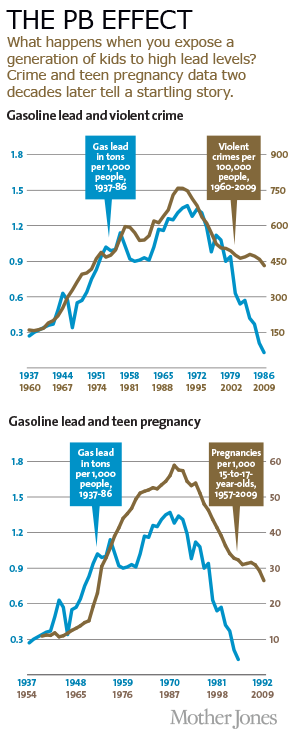
In cities across America, violent crime peaked in the early 90s and then declined sharply, in many cases by up to almost 80%. Crime rates and their decline haven’t shown links to the economy, to demographics, or to policies cracking down on crime. That said, there is one thing that shows a very strong link to crime rates: lead exposure levels from leaded petrol 20 or so years previously. Strict econometric techniques haven’t found any explanations for the variability in crime rates from any specific crime-fighting strategies by governments.

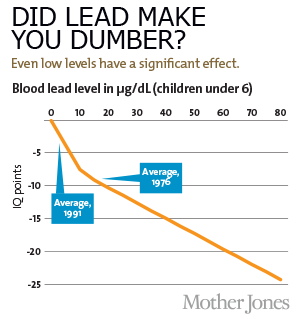
Lead poisoning in children, from sources such as leaded petrol and certain kinds of paint, damages brain development and leads to a whole host of complications later in life: drops in IQ, hyperactivity, behavioral problems, learning disabilities, impulse control, even juvenile delinquency further down the line. This damage is persistent, and lead to much higher rates of crime, teen pregnancy, and drug abuse down the line as a poisoned generation of children reach adulthood.

In studies conducted in America, lead emissions with a lag time of 23 years was found to explain 90 percent(!) of the variation in violent crime in America. In states where the use of leaded petrol declined slowly, crime also declined slowly, while a quick decline in use showed a quick decline in crime two decades later. Another study, looking at crime trends around the world, showed the same pattern found in America to also apply to Australia, and Canada, and the UK, and Finland and France and Italy and New Zealand and Germany, with every single country studied showing the same pattern.

This even applied to the neighborhood level: neighborhoods with high lead concentrations map up near-perfectly with crime maps. Even tiny levels of lead can cause significant and permanent damage to children that lasts over their lives. In the United States, almost 1 in every 40 children had levels of lead in their blood high enough to cause significant damage. What might that number be in a less developed country, without as strict an authority as the US FDA and EPA overseeing levels of toxins in the environment, and with leaded petrol being phased out much later?

Chart: The PB Effect

The biggest source of lead in the environment was leaded petrol, with other sources including leaded paint. Lead emissions around the world rose steadily from the 1940s through to the early 1970s, and then began to fall again as unleaded petrol replaced the leaded variety in many developed countries. With a 20-year offset, this mirrored the much-feared crime waves seen in many American cities, which peaked through the 1980s into the early 1990s before a massive fall.

In many developing countries, leaded petrol continued to be used. I can’t find data on the exact time periods in which we stopped using lead, but when I asked around people mostly remembered it as being in the early-to-mid 1990s. Between the rapid development set off by the tourism industry in the 1970s, which likely led to much increased use of motor vehicles by a now wealthier populace, and the replacement of leaded petrol by presumably the early 1990s, there would be a 20 or so year window where children faced high levels of lead exposure- generations that would be in their twenties and thirties now. If this is true, we should be able to expect an easing of the crime epidemic over coming years.

Chart: Did Lead Make You Dumber?

But we might be repeating this historical mistake, this time through exposure to dioxins and other byproducts from the burning and disposal of plastics. Dioxins are often found built up through the food chain in animal products, mostly cattle products and sometimes, in areas with high exposure, fish high up in the food chain, such as tuna. More directly, it is likely produced in the incomplete burning of huge quantities of plastic waste such as in Thilafushi.

Dioxins are carcinogenic and teratogenic, which means they can cause cancer and birth defects. Exposure to dioxins and other PCBs also affect fertility and reproductive health, and disrupt the balance of hormones in the body. Like lead, dioxins and PCBs may also cause developmental issues in children that persist over years. Some evidence has been found showing links between high PCB levels in children and poor performance on developmental and cognitive tests, with the effect most significant at birth. It appears that Male’, or anywhere exposed to toxins from Thilafushi smoke, is potentially a particularly harmful place to be pregnant in.

We deserve answers

We should be able to demand answers from our governments. For starters, a study on lead exposure and environmental lead levels throughout the Maldives, measuring blood lead levels in children and adults, and a thorough review of other developmentally damaging toxins that may be present in the environment along with a plan of action for cutting down on them. Nobody knew about the dangers of leaded petrol in the 1990s, but with current knowledge, it is the responsibility of the government to conduct proper reviews and the right of the public to know which toxins enter our bodies everyday and which effects they might have on us or our children.

how could we reduce corruption and prevent another dictatorship?

Well, it’s an open question and I don’t have all the answers. These are just a handful of possible suggestions drawn from our earlier crowdsourced manifesto, attempting to create enough fallbacks and checks and balances and devolution to prevent a dictatorship from happening again and again. Please send in any feedback and suggestions.


Transparency of finances for members of government

The public has the right to see whether those in power receive financial benefits for their actions, and to see which conflicts of interests may be held by those in power.

1. Elected officials, cabinet members, and heads of major independent government bodies having to declare assets at the beginning of each term, and will have to be audited once a year.

2. All transactions in or out of over 50,000 Rufiyaa by any elected official, cabinet member, or judge having to be put on the public record within one month of the transaction happening, and financial institutions will be required to disclose information for such transactions.

3. Non-home assets of the President, Vice President, and Supreme Court Justices having to be placed in a blind trust for the duration of their term.


Transparency of the activities of government

1. An open government portal with information at the island level, with updates on the progress of any development in every island mandated on at least a quarterly basis, so that every citizen in the Maldives can monitor what the government is doing anywhere in the country.

2. Protections for whistle-blowers. A fully anonymous system, vetted by international authorities to ensure security, for whistle-blowers.

3. An independent public inquiry into major crimes with suspected government culpability, such as disappearances, murders, and theft of public resources, for fact-finding and restorative justice.


Devolution of powers from central authority

Decentralization of political authority, both to other branches of government and to other physical locations in the Maldives, reduces the possible amount of power held by any one individual from Male’.

1. A biannual citizens’ council as an upper house of parliament that consists of a demographically representative panel of citizens drawn randomly twice a year, in a deliberative democratic model. Citizens meet with stakeholders and experts over days of deliberation, similar to a jury, and come to a verdict. The citizens’ council would have veto power for major legislation and propose recommendations to parliament so that politicians can no longer override the wishes of ordinary citizens. A new set of citizens are drawn for each biannual council, which is immediately dissolved after each session. Unlike career politicians, these citizens have no need to kowtow to the rich to hold on to power. The biannual citizens’ council will alternate between a major Southern and Northern island.

2. A non-governmental organization consisting of experts who evaluate government policies, budgets, financial disclosures, and all other activities of government and publish simple reports for ordinary citizens, will be established by a government endowment. This organization will be established in Addu City, physically and politically insulated from the powers in Male’.

3. Some taxation and spending autonomy for atolls. While the central government would still be the major taxation and spending authority, atolls having municipal authority to collect some forms of taxes and to spend those as it sees fit would make them less dependent on the largesse of the central government in Male’. With spending more localized, those in charge of local budgets would have much closer relationships with the citizens whose tax money is being spent, and so have an incentive to spend well and avoid the anger of their fellow residents.


Prevent a dictatorship from happening again

Reduce the powers of the Presidency and ensure independence of government bodies.

1. A firewall legally preventing the executive or legislative branch from interference in independent government bodies such as those overseeing the media, elections, judicial oversight, anti-corruption activities, or the Truth and Reconciliation Commission.

2. An independent government body to administer military benefits, such as housing and pay, from a budget allocated by parliament, with the President or executive branch no longer having any influence over military benefits and no politicians able to secure military support by promising increased benefits.

3. The President’s Office would no longer have the power to unilaterally appoint or remove appointees to any independent government bodies. Instead, heads of these bodies can only be removed by vote from a majority of its members.

4. The President’s Office would not be allowed access to internal information on the operations of those bodies aside from what is officially required.

5. To prevent coercion, the heads of independent oversight bodies would have immunity from a certain list of charges such as terrorism or sedition during their terms, and cannot be restricted from freely leaving or entering the country.


crowdsourcing a manifesto

This post is inspired by many of the responses to this post about what people would like to see from a government, as well as from over Twitter. What do we really want from a government? This is our compilation of both Twitter’s and our ideas, edited and written up in manifesto form. You can add comments and suggestions here.


CREATE AN EQUAL SOCIETY

Equitable sharing of our natural resources

We believe the resources of the Maldives belong collectively to all citizens, not just the rich. We would assign a 30% ownership stake to every resort for citizens of that atoll, with the profit dividend paid out too all atoll citizens as a starting point for a Universal Basic Income. Local citizens would have a say in decisions, and would be able to attend Annual General Meetings of resort companies and receive the annual financial statements of the resort.

Biannual citizens’ council as an upper house

Career politicians have too strong an incentive to kowtow to the rich and powerful to keep their power, and are vulnerable to corruption. We will establish an upper house of parliament that consists of a demographically representative panel of citizens drawn randomly twice a year, in a deliberative democratic model. Citizens meet with stakeholders and experts over days of deliberation, similar to a jury, and come to a verdict. A new set of citizens are drawn for each biannual council, which is immediately dissolved after each session. This reduces corruption and gives power back to the people. The citizens’ council will have veto power for major legislation and propose recommendations to parliament so that politicians can no longer override the wishes of ordinary citizens. [x]

Progressive income tax and land tax

We need a wider revenue base to continue development in the country. We would establish an annual land tax on registered plots for 2% of the market value of that land. We would also implement a progressive income tax for all earners with an income above 25,000 Rufiyaa, with a higher marginal tax for the highest income bracket. Land tax rebates will be given for productive uses of land such as rental housing or high-tech agriculture.

Build social housing to push down market rent

Rent is unaffordable for most citizens. We will build social housing to push down market rents, with a target of providing enough housing supply for the market rent to reach levels affordable to working adults.

Justice for women

We will criminalize street harassment, update the legal definition of sexual assault to international standards, and instate harsher penalties for domestic abuse, sexual assault, “revenge porn”, and other forms of violence against women. As the current justice system is inadequate on issues of violence against women or sexual violence, we will create a judicial oversight body staffed entirely by women to provide oversight, recommendations, and appeals on cases to do with gender discrimination or violence against women. Company boards will be required to reserve at least one-third of their seats for exclusively women, and at least one-third of the slate of candidates any party registers for elections must be women. We will also eliminate the Massaru Tax. Education for school students on consent, sexual safety, and reproductive health will be required.

Workers’ rights

We will require half of the board to be assigned to worker representatives for companies with 50+ employees. We will legally enshrine regulations for minimum standards of wages, working conditions, and hours for private companies as well as public. Companies will be required to provide workers’ compensation for injuries on the job. [x]

Expatriate rights

Expatriate workers from other South Asian countries should not have to live in squalor while facing exploitation and discrimination. Workers’ rights will apply equally to expatriate workers, not just citizens. We will instate punishments and fines for employers found to have exploitative working conditions. Expatriate workers will be entitled to holiday periods to be able to visit their families without losing their jobs. The practice of employers holding on to deposits, passports, or documents of expatriate workers to restrict their free movement will be criminalized.

Treat drugs as a public health issue

Our current way of dealing with the drug crisis hasn’t worked. We should learn from the Portuguese model, which eased their heroin crisis, by focusing on rehabilitation for non-dealing drug users instead of imprisonment with hardened criminals. [x]

Proactive mental health care

Aasandha will be expanded to include mental health care. An official mental health hotline will be created and awareness campaigns about mental health will be held. All school students will be assigned five appointments with a mental health professional over each year. The government will also fund visits by a team of mental health professionals to schools in every island at least annually.

Public health monitoring

Large parts of the population have deficiencies in basic minerals such as iron or zinc, especially in the atolls where fresh produce is less easily available than in Male’. Citizens also face exposure to environmental toxins, such as dioxins from the burning of plastic waste. We will monitor levels of environmental toxins, lead, and nutrient deficiencies across the country with every island monitored at least once a year. In regions with micronutrient deficiencies, the government will provide supplementation. Increased levels of lead or environmental toxins will be met with immediate action to reduce exposure and remove sources. [x]


SUSTAINABLY DEVELOP THE ECONOMY

Meaningful decentralization

The development of Kulhudhuffushi and Hithadhoo ports will promote local commerce and industry, the land tax will incentivize moves away from costly Male’ land and towards development in the atolls, local ownership in resorts will provide an income source for atoll residents, and the government microfinance body will focus on investment in the atolls. In addition, we will open provincial offices for ministries in a major Northern and Southern island, and require at least 25% of ministry staff operations to be based in the provincial office.

The government will offer young people incentives to move to communities in regional capitals that can absorb and integrate an influx of youth– this could be offers of free government-built housing (usually free with conditions, for example a ten year rent-free period upon moving), business startup funds, loan forgiveness, or scholarship money. [x]

Partial taxation and spending autonomy for atolls

While the central government would still be the major taxation and spending authority, we will entrust atolls with authority to collect some forms taxes and to spend those as it sees fit, making the atolls less dependent on the largesse of the central government in Male’. With spending more localized, those in charge of local budgets would have closer relationships with the citizens whose tax money is being spent.

Diversify the economy with high tech industry and renewables

We will build an ICT services outsourcing center like those fueling the ICT industry in India, to employ local coders and technical workers. Cutting-edge vertical farming, aquaculture, and solar power firms will be invited to develop in the Maldives with promise of contract for commercially viable developments, employing and training young workers. We will also develop our national infrastructure in an efficient and sustainable way by fully digitizing the public sector and beginning a rapid transition to using renewable energy sources.

Microfinance body funded by small-scale foreign investment

We will establish a government microfinance body to lend to listed small projects throughout the country. To fund this, the microfinance body will issue no-dividend securities marketed to luxury resort tourists by appealing to current trends of socially conscious tourism. For wealthy tourists able to spend thousands of dollars a night for resort stays, it provides a way of giving back to local communities. For us, it provides foreign direct investment on a microfinance scale. Projects from the islands will be given priority over those from the Male’ area.

Upgrade international ports in Male’, Kulhudhuffushi, and Hithadhoo

Male’ Port has a capacity well below what is needed, and operates slowly and inefficiently. Issues with ports can add up to 30% to the cost of imported goods. Currently, all imports to atolls first arrive to Male’ Port and then are shipped domestically to atolls, where the cost of shipping goods to islands from Male’ is even higher than shipping from Male’ to Singapore. Many goods also have to be shipped from Male’ on passenger boats, and the difficulty makes providing fresh imported produce difficult or impossible. Kulhudhuffushi and Hithadhoo have international ports, but those are currently only used for resort building material and not consumer goods. We will modernize Male’ Port to meet needs efficiently, reducing costs, and we will develop Kulhudhuffushi and Hithadhoo international ports to receive consumer goods for the atolls.

Environmental protections

We will designate the EPA as an independent body with oversight responsibilities. We will also ban single-use plastic products, and protect environmentally vulnerable ecosystems by creating special protected areas. The EPA will carry out a survey of lead and environmental toxin levels in the population of every island and take steps to minimize these levels. Thilafushi will be developed to minimize the exposure of  nearby inhabited islands to toxins from burning waste.

Getting out of the debt trap

We will reduce our dependence on China and Saudi Arabia, and its effect on our sovereignty, by looking to restructure our debt to a more diverse set of lenders. In the longer term, we will begin to use income tax and land tax revenue to reduce our debt burden and keep our public finances in check. [x]


HOLD GOVERNMENT ACCOUNTABLE

Reduce corruption

We will create an open government portal with information at the island level, with updates on the progress of any development in every island mandated on at least a quarterly basis, so that every citizen in the Maldives can monitor what the government is doing anywhere in the country. A non-governmental organization consisting of experts who evaluate government policies, budgets, financial disclosures, and all other activities of government and publish simple reports for ordinary citizens, will be established by a government endowment. This organization will be established in Addu City, physically and politically insulated from the powers in Male’. A fully anonymous system, vetted by international authorities to ensure security, will be established for whistle-blowing, and protections will be provided for whistle-blowers.

Elected officials and cabinet members have to declare assets upon entering office, and will face an audit every year. Non-home assets of the President, Vice President, and Supreme Court Justices will be placed in a blind trust for the duration of their term. All transactions in or out of over 50,000 Rufiyaa by any elected official, cabinet member, or judge will have to be put on the public record within one month of the transaction happening, and financial institutions will be required to disclose information for such transactions. Rules allowing the sale of islands without bidding will be reversed. [x]

Prevent a dictatorship from happening again

The President’s Office will no longer have the power to unilaterally appoint or remove appointees to any independent government bodies. Instead, heads of these bodies can only be removed by vote from a majority of its members. Aside from what is officially required, the President’s Office will not be allowed access to internal information on the operations of those bodies. To prevent coercion, the heads of independent oversight bodies will have immunity from a narrow range of selected charges such as terrorism, sedition, or disrupting the peace during their terms and cannot legally be restricted from freely leaving or entering the country. Heads of the major independent bodies also have to declare all transactions in and out of over 50,000 Rufiyaa.

We will establish a “firewall” legally preventing the executive or legislative branch from interference in independent government bodies such as those overseeing the media, elections, judicial oversight, anti-corruption activities, or the Truth and Reconciliation Commission. One such body will carry out the administration of military benefits, such as housing and pay, from a budget allocated by parliament, with the President or executive branch no longer having any influence over military benefits and no politicians able to secure military support by promising increased benefits. Reforms will be carried out for law enforcement and military agencies.

Truth and Reconciliation Commission

We will hold an independent public inquiry into disappearances, murders, theft of public resources and other crimes for fact-finding and restorative justice.

Automatic voter registration

All voters who will turn 18 by polling date will be automatically registered to vote.


A shorter version as a much more shareable image:

prelim manif v2


This is a rough draft. Specific details, such as the 2% number for land tax or the details of which charges immunity would be given for heads of independent bodies during their terms, are placeholders for now.


a look at government policy, china, and our debt

Under half a billion dollars (about $405 million) is allocated for the entire Public Sector Investment Program for the year. The Maldives does currently have a very high share of GDP going to health because the hospital mega-project is a large share of this small an economy, but mentioned are absolute numbers, not percentages, maybe because percentages are zero-sum and that makes it impossible to have high percentage numbers for every single sector of government expenditure.

According to the 2018 government budget booklet, 11% of our budget went to interest payments on our debt. Our total debt is more than half our GDP. Falling into a debt trap isn’t guaranteed, of course, but it’s silly to say that it’s not a risk.

obor debt trap

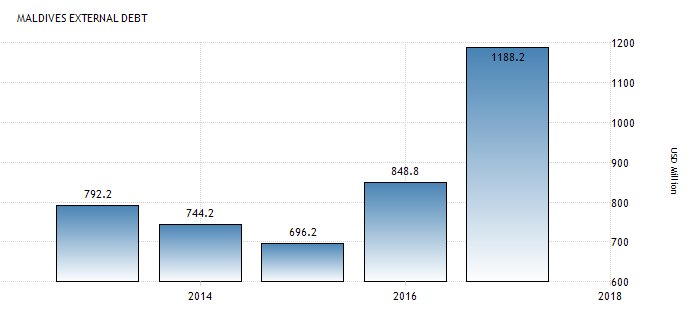
The Maldives’ external debt has gone from $790 million to almost $1.2 billion.

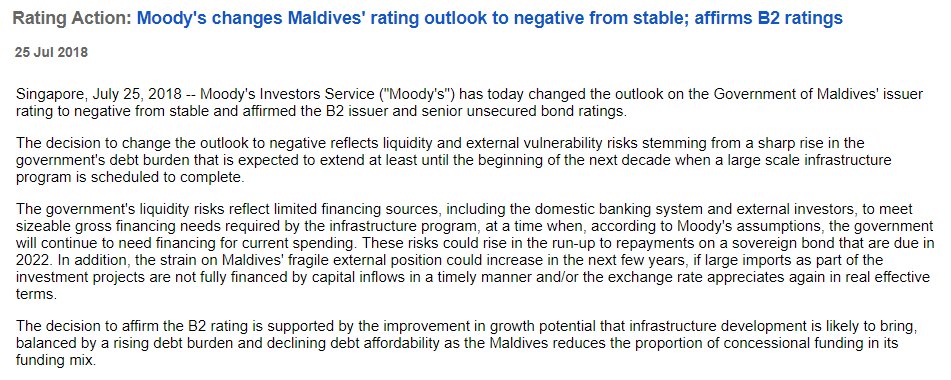
Our credit rating outlook* was recently downgraded because investors feel we might be unable to repay debt obligations. So, financial institutions don’t actually feel all that sure that we’ll be able to repay our debts.

There’s no need to panic, but saying default and the debt trap isn’t a risk is bullshit.

Going by minutes from their meeting with another Twitter user, YRY has argued that YAG managed to wrangle loans from China and that another leader wouldn’t be able to secure these loans. This is silly and intellectually dishonest. China started massive international investment around 2013 to achieve strategic and economic objectives with their One Belt One Road program. YAG didn’t inspire Xi Jinping to start a strategic investment of over a trillion dollars across Eurasia, including in the Maldives.

Some other projects (of hundreds) also happening over the past few years:

  • Khorgos, a massive “landlocked port” in a shared zone with Kazakhstan
  • A “new Dubai” near Colombo along with a massive port in Hambantota. To pay back debt, Sri Lanka gave the port to China on a long-term lease with promise they’d keep military out
  • Chinese overseas military base in Djibouti
  • Chinese port and presence in Gwadar, a small fishing village in Pakistan that is planned to be turned into major port on the maritime silk road

Over 60 countries receive loans from Chinese banks as part of the One Belt One Road initiative, which began massive spending in countries  all around Asia, Europe, and some of East Africa to build trade routes and to send some of China’s excess capacity in construction industry to other countries where those employees could continue to work and those companies could continue to make profits.

China doesn’t make investment decisions based on who happens to be the President of the Maldives. There’s power imbalance between the two nations is way too huge. Investment has happened across dozens of countries with very different political leadership, including many different policy, regulatory, and business environments. There are ways a government could dissuade investment, but realistically, China has a strong incentive to continue for economic, political, and strategic reasons.

China relies on rapid growth to maintain the popularity and legitimacy of the government. With their growth boom starting to slow down as they become more of a consumption-based instead of export-based economy, there remains a lot of Chinese industrial firms that were excess to current requirements of building within China. These firms and their workers are used productively to invest in infrastructure along routes of commerce around the world to keep firms employed and the growth rates going.

The Maldives, along with Sri Lanka, lies in a strategically vital part of maritime trade routes. The One and a Half Degree Channel in the Maldives and the narrow ocean path between us and Sri Lanka are key, and if China can secure one, they can ease the geopolitical risk of another government or military cutting off those routes with a blockade. If China can establish a military base, like they have in Djibouti on the coast of East Africa, they would also be able to project military power in the Indian Ocean and counterbalance India’s power in the region. (This clearly spooks India, which is why they’ve responded to the Maldives’ growing dependence on China with alarm).

Sri Lanka recently faced a debt trap with massive Chinese investments, in both a port and in building a flashy mega-project supposed to be a “new Dubai”. To settle their debt, they had to essentially hand over a port to China, leasing it out for 99 years. China has a clear strategic interest in getting a physical presence in the Maldives: we’re in an important location on ocean trading routes, we’re close to India and a Chinese presence here helps China counter its primary geopolitical rival, and Chinese influence over the One and a Half Degree Channel “choke point” would allow it to continue to trade with Europe and Africa while losing it would make China more vulnerable to a blockade by a rival power.

A lot of our recent economic growth has been driven by external factors, mostly in China. One is the Chinese infrastructure boom, where China is investing $1 trillion worldwide, mostly as part of the One Belt One Road project but also in general. Chinese investment and worries of neocolonialism has been a major issue across Africa for the past decade, for example. Another key factor is the Chinese middle class boom, with hundreds of millions of Chinese citizens entering the middle class over the past year with hundreds of millions more projected to reach those levels of wealth over coming years. The Chinese middle class has massive purchasing power and more upscale tastes, including in vacations. The number of Chinese tourists arriving in the Maldives has increased more than tenfold over the past decade and a half and is accelerating, and they’re bringing wealth with them. These factors would have happened regardless of who was President and will continue to happen regardless of who becomes President.

Something else stands out. If there’s been a consistent thread in recent Maldivian foreign policy, it’s acquiescing to China and Saudi Arabia. Let’s look at who we get the majority of our loans used to fund the investment policies of this government:

PSIP funders

That’s right: the flagship policies of this government, which it’s touting as reason for re-election, are funded with heavy backing from the China Export-Import Bank, which is a state-owned company that exists to further Chinese state policy, and the Saudi Fund, which is owned by the government of Saudi Arabia. I wonder if this government’s indebtedness to China and Saudi Arabia affected our sovereignty by, for example, making the government openly take sides in Saudi Arabia’s conflicts that have nothing to do with us?


*Corrected an error: it should have read “credit rating outlook” instead of “credit rating”, as supported by the accompanying image.


what do parties promise in other countries most like our own?

What do we do differently in our politics? What do countries in similar situations and contexts as us have going on politically? What might a policy platform or manifesto look like in a country similar to ours? What might our politics look like, in some alternate universe? We’re gonna look at one possible comparison, the platform for the center-left Democratic Labor Party of Barbados.

Why Barbados? The Maldives and Barbados are both island nations heavily dependent on tourism, which accounts for about half of the Barbadian economy. Barbados is probably the closest match to the Maldives of any country in the world. They’re similarly sized (115 sq mi for the Maldives to 170 sq mi for Bahamas), have similar populations (430,000 to 280,000), and have a population density closer to the Maldives than most other nations on Earth (2900 per sq mi to 1700 per sq mi) that is ethnically quite homogeneous (over 90% belong to one ethnicity).

The two also have similarly sized economies at $4.8b and $4.4b respectively, similar GDP per capita accounted for purchasing power at roughly $20,200 to $16,700, a similar Human Development Index score at 0.706 to 0.796, and Barbados also has currency pegged to the US Dollar (exchange rate 2 BBD per USD).

Barbados has a two-party system with the two major parties, the Barbados Labor Party and the Democratic Labor Party, both relatively moderate parties without major ideological differences. Elections have a strong personal aspect and voter allegiance is often based on tradition. The major problems it faces are creating jobs, especially for youth, as well as economic diversification, supporting small business, and continuing to develop the tourism sector.

An important context going into this manifesto is that Barbados has a land tax, at rates ranging from 0.1% of the current market value of their property for units with smaller valuations up to 0.75% for more valuable properties, with over a hundred thousand units listed and paying land tax. Exemptions to the land tax are made for universities, religious institutions, charity organizations, cemeteries, and the like. In 2012, the revenue from the land tax was about US$60 million, of which $22m was from residential plots, $21m from non-residential, and $17m from land-only.

This post is just a look at the platform of a mainstream center-left party in another country like ours, for purpose of comparison. Some of these policies won’t apply to the Maldives, some are already being done here, and some might work in Barbados but wouldn’t in our context. Either way, it’s an interesting read. I haven’t included every single detailed policy proposal and I left out the obvious and generic ones, but this will be a pretty good look at their policy proposals.


Policy positions from the Democratic Labor Party Barbados manifesto

Develop the tourism industry:

  • 15% land tax rebate for tourism related entities that demonstrate at least a 25% increase in use of local inputs from local agriculture, cultural industries, and manufacturing and maintain that use.
  • Further 10% land rebate for tourism related entities that install systems for at least 50% of electricity generation requirements from renewable sources.
  • Tourism entities can claim corporate tax deductions of up to 150% of expenditures related to use of local inputs.
  • Fund a programs to link agricultural businesses and entertainers with tourism and hospitality industry businesses for partner relationships.

Promote entrepreneurship, small business, and innovation:

  • Promote SMEs in education, healthcare, tech, renewables, agriculture, and cultural industries.
  • Foster linkages/partnerships between SMEs and tourism industry.
  • Partner with credit union and co-op sector in SME financing
  • Double the budget of the Youth Entrepreneurship Scheme

Boost investment in local communities through credit unions and co-ops:

  • Reintroduce income tax deduction for credit union shares and deposits.
  • Remove asset tax on co-ops.
  • Provide deposit insurance on deposits at co-ops.
  • Include credit unions and co-ops in facilitating SME financing.
  • Incentivize development of crowd-funding platforms, mobile banking, and other fintech solutions.

Modernize the public sector:

  • Implement service charters and performance indicators for all government departments and statutory corporations to maintain accountability.
  • Create a youth-led project to digitize the entire records system of the public service to boost efficiency, employ youth, and improve the ease of doing business.

Improve public health:

  • Establish a program providing in-home and community based health checks and information along the lines of the Cuban model.
  • Provide mandatory health checks at schools.
  • Enhance the use of telemedicine and other digital technologies to reduce the cost of healthcare delivery and healthcare management.
  • Give tax credits for preventative health activities such as gym memberships.

Establish better mental health care:

  • Free counseling as primary care for all 16-25 year olds.
  • Mandate an additional training course for all GPs in mental health issues.
  • Establish a permanent mental health awareness and advertising program.
  • Build a registration and licensing system for mental health professionals.
  • Develop a new service to address addiction and mental health dual diagnoses.

Focus on harm reduction in the war on drugs:

  • Decriminalize possession of less than a minimum quantity of marijuana.
  • Ensure the resources of the criminal justice system are targeted at pushers and that medical supports are focused on the victims of drug abuse.
  • Create a drug court to direct drug users towards treatment and management instead of prison.

Create a disability friendly society:

  • Work with key stakeholders in the disabled community and in line with international best practices.
  • Develop international and private/public partnerships to provide wheelchair access to all public buildings and complete a wheelchair friendly sidewalk program.
  • Improve educational supports for children with special needs by expanding the number of educational psychologists in the Ministry of Education.
  • Develop and implement a Comprehensive Employment Strategy for People with Disabilities.

Take a community-based approach to crime:

  • Zero tolerance to domestic abuse.
  • Conduct community based anger management and dispute resolution cases.
  • Expand a national Youth Service and similar programs to provide young males in particular with viable alternatives to crime.
  • Enhance prison rehabilitation programs.
  • Partner with civil society to expand programs in parenting skills.

Support social renewal:

  • Carry out ongoing workshops on conflict resolution in schools from primary to secondary.
  • Teach civics in primary and secondary school.
  • Promote community policing and healthcare.
  • In-home community based health care and health checks by trained youth volunteers from the community.

Promote gender equality:

  • Mandate at least 50% female membership on all state boards by 2026.
  • Mandate at least 25% female membership on all private sector boards.
  • Compel all large companies to publish gender discrimination data publicly.

[note: we’ve argued before here that quotas mandating representation of women actually increases not just fairness but productivity]

Ensure national food security and developing agricultural capacity:

  • Build a new agricultural training institute that is among the best in the region and will attract local and international candidates.
  • Provide government-owned land for agricultural projects that are focused on youth and/or are scalable and commercially viable.
  • Facilitate foreign direct investment into high impact agricultural projects.
  • Promote widespread use of cutting edge agricultural technologies such as aquaponics or vertical farming, and remove all taxes related to import of equipment and supplies.
  • Provide a market for farmers’ products by offering long term purchase contracts to supply fresh food to government institutions and promoting Barbados in tourism as a fresh food destination.
  • Agri-business incentives:
    • 10 year tax holiday for new agri-business entities or for venture capital funds focusing on agricultural businesses.
    • Make up to 150% of loan interests, R&D research, staff training expenditures, and marketing expenditures for agri-businesses tax-deductible.
    • No withholding tax on interest earned by financial institutions for 10 years on agricultural investments, or dividends received by shareholders in agri-business entities

Develop cultural industries:

  • Create a permanent home for a National Cultural Foundation (NIFCA).
  • Provide scholarships and business financing for NIFCA winners.
  • Fund a programs to link artists and entertainers with tourism and hospitality industry businesses for partner relationships.

Bring about a renewable energy revolution:

  • Facilitate utility-scale renewable energy projects to get to 50% of peak demand by renewables by 2026.
  • Establish a green public transport fund to support the replacement of the state public transport fleet with greener vehicles or vessels.
  • Provide a 25% rebate on land taxes to households with vehicles not powered by fossil fuels.
  • Invite international investment into developing high-tech renewable energy.

Increase digital connectivity:

  • Equip schools for the digital age.
  • Promote free wi-fi access in public spaces.
  • Provide accelerated depreciation for capital costs of establishing an e-commerce or digital commerce platform.
  • Provide corporation tax credits for up to 150% of the costs of operating a digital commerce platform.
  • Direct capital investment in updating health, education, transport, energy, agriculture, tourism, and other sectors.
  • Promote Barbados as location of choice for ICT businesses in the region through Invest Barbados.
  • Develop and implement a National Broadband Plan.

we should treat addiction as a public health issue

Treating drug addiction like a criminal issue has failed. Everywhere. Not just here, but in every part of the world from the U.S. to South East Asia. It is as proven a failure as any policy worldwide, and there isn’t much of a public good case to be made for it.

People seem to feel that people who would use drugs deserve some form of punishment, but if your reasoning is punitive, you should be able to see whether that argument stands on its own instead of conflating it with the public good or well-designed public health policy. I personally don’t think that drug use should be punished: the whole problem with addiction, for those susceptible to it, is that it takes hold in the brain and makes quitting absolute hell, regardless of whether your original use was a mistake you now deeply regret.

Have some empathy: do you believe that there’s no possible path your life could have taken- not if you’d fallen in with the wrong people while young, not if you’d spiraled into horrible decisions during grief, not if you’d just been a dumbass kid and your adult self wishes you could scream at that kid to never do it? If you’d made any of those mistakes, you’d now be on the hook for it indefinitely, because that’s addiction. And instead of trying to help you get back on your feet, the state and society punishes you for the way your mistakes changed your body into something that craves a chemical like it craves food or water.

But let’s leave that aside for now. Where has drug policy worked? Portugal’s a good example. Portugal was hit by a drug epidemic in the 1980s that resulted in one of every ten people being heroin users. In 2001, Portugal decided to treat addiction seriously as a public health issue.

Portugal decriminalized the possession and use of drugs (to be clear, just possession and use, not dealing). Drug users were directed towards treatment, not into the prison system where they would only further excluded from common society, fall behind on getting work and rebuilding their lives, and fall in with hardened criminals. People caught with a small amount of drugs weren’t arrested. Instead, they had to meet with a small local commission made up of a doctor, lawyer, and social worker, who worked with them on treatment and provided support systems during recovery. Drop-in clinics in quiet and anonymous unmarked locations provided counseling, clean clothes and a shower, blood testing, and help with finding rehab, jobs, or re-integrating into society.

The drug crisis eased. Drug use, HIV and hepatitis infection rates, overdose deaths, and drug-related crime all dropped. HIV infection rates fell by 96%.

Portugal’s policy is guided by principles of compassion and empathy: a belief in treating everyone as individuals with human dignity, as thinking of the root causes that might lead an individual towards drugs. Without the risks of legal jeopardy, clinics, pharmacies, and NGOs were able to work together to provide a safety net of services for their communities. Government endorsement has powerful effects on social views of issues, and the cultural shift on how drug users were viewed helped create a climate where prevention, treatment, and rehabilitation could be the focus.

In the early days of the crisis, Portugal, which it is important to note is quite religiously conservative a country, responded by demonizing drug users as a stain on society and drugs as a manifestation of Satan. But that didn’t work, just like it hasn’t worked anywhere else.

It is important to note that most medical organizations describe addiction as a disease:

Like diabetes, cancer and heart disease, addiction is caused by a combination of behavioral, environmental and biological factors. Genetic risks factors account for about half of the likelihood that an individual will develop addiction.

Addiction involves changes in the functioning of the brain and body. These changes may be brought on by risky substance use or may pre-exist.

Why is willpower often not enough?

The initial and early decisions to use substances reflect a person’s free or conscious choice. However, once the brain has been changed by addiction, that choice or willpower becomes impaired. Perhaps the most defining symptom of addiction is a loss of control over substance use.

Are people with addiction responsible for their addiction?

People with addiction should not be blamed for suffering from the disease. All people make choices about whether to use substances. However, people do not choose how their brain and body respond to drugs and alcohol, which is why people with addiction cannot control their use while others can. People with addiction can still stop using – it’s just much harder than it is for someone who has not become addicted.

People with addiction are responsible for seeking treatment and maintaining recovery. Often they need the help and support of family, friends and peers to stay in treatment and increase their chances of survival and recovery.

Why some people say addiction isn’t a disease

Some people think addiction cannot be a disease because it is caused by the individual’s choice to use drugs or alcohol. While the first use (or early stage use) may be by choice, once the brain has been changed by addiction, most experts believe that the person loses control of their behavior.

Choice does not determine whether something is a disease. Heart disease, diabetes and some forms of cancer involve personal choices like diet, exercise, sun exposure, etc. A disease is what happens in the body as a result of those choices.

Others argue that addiction is not a disease because some people with addiction get better without treatment. People with a mild substance use disorder may recover with little or no treatment. People with the most serious form of addiction usually need intensive treatment followed by lifelong management of the disease. However, some people with severe addiction stop drinking or using drugs without treatment, usually after experiencing a serious family, social, occupational, physical, or spiritual crisis. Others achieve sobriety by attending self-help (12-step or AA) meetings without receiving much, if any, professional treatment. Because we do not understand why some people are able to stop on their own or through self-help meetings at certain points in their life, people with addiction should always seek treatment.

[Center on Addiction]

The real question: would decriminalizing drugs sell as a policy in the Maldives, or would the very phrase itself cause an uproar by people horrified at the prospect of some lawless Mad Max: Fury Road style situation? Yes, probably. It might be a step too far to start with. But I think that there are little steps we can take. In a remotely just society, drug users facing any kind of mandatory incarceration should at the very least do so exclusively in rehabilitation facilities, separate from violent offenders, where users will get treatment and have a chance at re-entering society ready to be a part of it instead of further isolated from it. I don’t think that’s enough, but it’s a start.

universal basic income

i was really disappointed recently to hear that the newly elected conservative government in ontario scrapped their pilot program for a universal basic income. i’ve been a fan of basic income for years and i’ve been thrilled to see it enter the mainstream recently around the world. i don’t know the numbers for how much revenue we can get with income and/or land taxes established to know whether the maldives would be able to get into a fiscal position that would allow us to have one in the immediate future, but i genuinely believe that a lot of the world is going to transition to a basic income in my lifetime.

that’s one of the reasons this setback is so disappointing. ontario was going to be a pioneer in one of the most important economic policies possibly in history, one that’ll be a fundamental change in the way humanity lives and works and what we create or produce as a society.

a universal basic income will change the basic social contract of how humankind sees its relationship with the state and each other. it’ll liberate people from the coercion of paying for survival. it’ll reshape society towards a flourishing of art and research and innovation and helping each other. people won’t be forced to shape their entire lives around paying for existence, and that means people will be freer to follow their dreams, make art, collaborate, research, educate and spread ideas. imagine the possibilities! the person who will discover the cure to cancer might be working in a minimum wage job to make ends meet right now, putting off going to university. and there’s going to be millions of people like that, around the world. tens of millions. it’ll be a flourishing unlike anything we’ve ever seen. and all the while, it lets us allow automation to boost our quality of life dramatically, without the need to keep thousands employed in manual labor so they can survive.

something even more powerful:  much like other social programs before it, universal basic income fundamentally changes what we expect of our governments and what we consider our basic rights. the rights won by suffragettes and protesters seemed distant once. the rights written down in the universal declaration of human rights felt revolutionary at the time. soon, at least in some countries around the world, the freedom to exist without paying for existence will be as obvious and natural a demand as the basic rights people expect by default now.